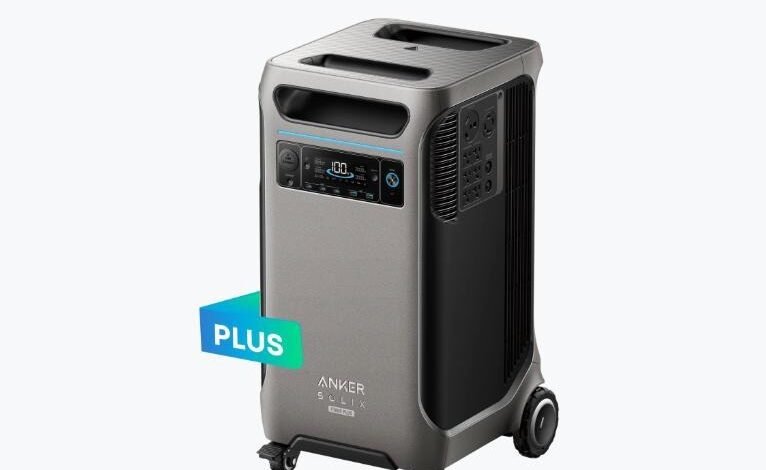
A power station may look simple from the outside, but the way it decides how to distribute energy is anything but. Every time a user plugs in a device, toggles a circuit, or switches between charging inputs, the internal power management system evaluates demands and assigns output priority. This decision-making process affects runtime, system stability, and user experience in meaningful ways. Instead of delivering energy randomly, a well-designed station follows structured rules: some imposed by hardware design, some by firmware logic, and some shaped by user-defined settings. Advanced systems such as the Anker SOLIX F3800 Plus Portable Power Station demonstrate how intelligent power routing improves resilience and smooth power delivery, especially when multiple devices run at once or overall demand reaches higher levels. Understanding these rules helps users predict behavior and plan their power workflow with far greater accuracy.
How Does a Power Station Evaluate and Assign Output Priority?
Load Characteristics Guide the Order of Power Delivery
Every device draws power differently, and the station responds by ranking loads according to stability and impact. Essential loads with consistent draw—such as refrigerators, pumps, or communication equipment—tend to receive uninterrupted flow because they protect safety and prevent spoilage or damage. High-surge appliances, such as air conditioners or power tools, require the station to check available output before activating the circuit. When the station detects a load that could exceed capacity, its internal logic may delay or restrict output to keep the system within safe operating limits. The F3800 Plus manages these decisions through intelligent controls that interpret both surge patterns and continuous draw. Users benefit because priority assignment prevents sudden shutdowns and ensures critical appliances remain powered when several devices compete for energy at once.
Port Hierarchies Establish Operating Sequences
Power stations often feature a hierarchy embedded in port design. Large AC outputs typically receive priority when the overall load increases because they serve major household or outdoor appliances. DC outputs, USB ports, and specialty connectors may shift to secondary status during periods of high demand. This hierarchy allows the station to maintain core power distribution first while limiting risk. With dual-voltage AC output, the F3800 Plus distributes energy in a structured manner that preserves stability for appliances requiring 120V or 240V. This approach becomes essential when users attach a mix of sensitive electronics and high-draw equipment. The station analyzes which ports fall under essential-output categories and then moderates nonessential ones, ensuring a balanced, reliable supply across the entire system.
Protective Logic Prevents Overload and Dictates Output Limits
Protection systems inside a power station influence output decisions more than many users realize. When total demand approaches the maximum threshold, the station automatically prioritizes sustaining a stable energy stream rather than satisfying every output simultaneously. For example, if multiple appliances try to draw power beyond the safe limit, the system may reduce output to lower-priority ports or temporarily deactivate them. These actions prevent overheating and protect components from stress. The F3800 Plus integrates safety mechanisms that respond to potential overload by adjusting distribution across its outputs. Users experience smoother performance because the station actively prevents abrupt cutoffs. This protective logic forms the backbone of output priority management and ensures long-term reliability even under variable or unpredictable loads.
How Do Usage Conditions Influence Real-Time Priority Decisions?
Charging Sources Affect How Output Is Managed
The source of incoming energy influences how a power station allocates outgoing power. Solar charging, for instance, fluctuates throughout the day depending on the weather and panel orientation. When solar input drops, the station may shift priority toward essential loads to maintain stability. When charging through AC or generator input, power becomes more consistent, allowing the station to support a broader range of devices at once. The F3800 Plus accepts four charging methods, each interacting with output demand differently. When paired with a home power panel, automatic storm-related charging events prepare the system for periods when output must remain stable for long stretches. Understanding the interplay between charging mode and output allocation helps users plan for scenarios that require constant operation.
See also: Phenomenon Studio Opinion: The ‘Outsource and Pray’ Model Is Killing Healthtech Innovation
System Capacity and Expansion Modules Change Priority Behavior
The total available capacity plays a major role in determining output priority. A station with limited storage must make tougher decisions, often reducing support for nonessential devices when power becomes low. In contrast, scalable systems with expandable capacity maintain more consistent priority across complex setups. The F3800 Plus can expand to very high energy storage, which broadens its output capability even when several appliances run continuously. As capacity increases, the system gains more flexibility to handle simultaneous loads without restricting ports. This expanded buffer alters real-time priority decisions: essential devices always remain stable, and secondary devices stay operational for longer periods without interruption.

User Intent Shapes Priority Through Manual and App-Based Controls
Users influence output decisions more than they often expect. Some power stations enable custom priority settings through mobile apps or control panels. The F3800 Plus allows remote monitoring and adjustment through the Anker app, giving users the power to observe consumption patterns and adjust their load strategy. When users manually disable specific outputs or schedule device operation, the station interprets these choices as part of its decision-making rules. Intentional management strengthens output consistency because the system no longer must guess which loads matter most. Instead, it follows a clear direction, blending automated protection logic with user preferences.
Conclusion
A power station decides output priority through a combination of hardware hierarchy, protective logic, load analysis, and user-defined preferences. Essential appliances receive consistent power, while high-demand or auxiliary devices adjust based on available capacity and overall system conditions. Charging sources, temperature, and expansion modules all influence how the station responds to changing environments. Systems like the Anker SOLIX F3800 Plus showcase how thoughtful engineering improves decision-making by combining scalable storage, multiple charging options, and intelligent controls. With this understanding, users gain confidence in how their power station station manages complex energy flows and maintains stable operation across household, travel, and off-grid applications.