Not every case sealer works the same way, and picking the wrong type can slow down your entire packing line instead of speeding it up.
A case sealer closes and tapes boxes automatically, but the level of automation varies a lot between models. Some need manual box loading, while others run with almost no human touch at all.
This guide compares the main case sealer types side by side, so you can match the right machine to your actual daily volume and box variety.
Table of Contents
- Manual Taping vs Case Sealers
- Semi-Automatic Case Sealers
- Fully Automatic Case Sealers
- Random Case Sealers
- Side-by-Side Comparison Table
- Which Type Is Right for You?
- Cost Differences Between Types
- FAQs
Manual Taping vs Case Sealers
Before comparing machine types, it helps to understand what you are moving away from. Manual taping uses a hand-held tape gun, and a worker folds each flap by hand.
This method costs nothing extra upfront, but it is slow, inconsistent, and tiring for staff. Tape usage also varies a lot from person to person, which wastes money over time.
Any case sealer even the most basic model, beats manual taping in speed and consistency. The real question is which level of automation makes sense for your business.
There is also a hidden cost to manual taping that many businesses overlook: worker fatigue. Repeating the same folding and taping motion hundreds of times a day leads to slower output as a shift goes on, while a machine keeps the same pace from the first box to the last.
Semi-Automatic Case Sealers
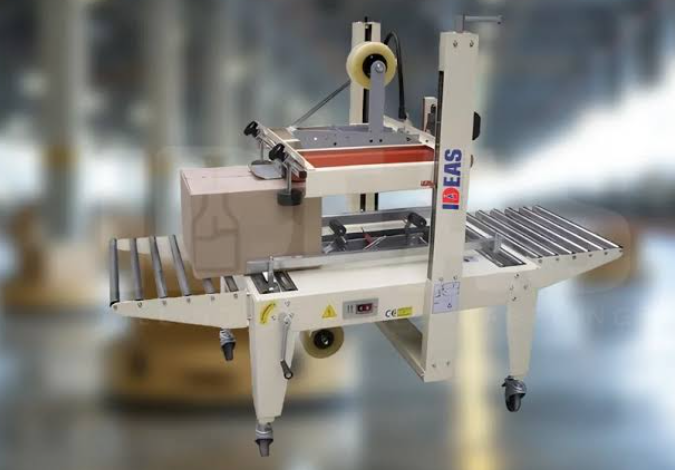
A semi-automatic case sealer requires a worker to place the box into the machine, but the folding and taping happen automatically from there.
This type suits businesses with a steady, predictable box size. Workers may need to adjust the width settings when box sizes change, which takes a few extra seconds each time.
Semi-automatic models are a great starting point for smaller operations that are ready to move past manual taping but are not yet running high enough volume to justify a fully automatic system.
Because these machines are mostly mechanical, they also tend to be simpler to repair. Most parts can be replaced with basic tools, which is helpful for businesses without an in-house maintenance team.
Fully Automatic Case Sealers
A fully automatic case sealer works with almost no manual input. Boxes arrive on a conveyor, and the machine detects size, folds flaps, and applies tape without a worker touching the box.
These machines suit high-volume lines where speed matters most. They typically run 20 to 35 boxes per minute, and some high-speed models go even faster.
The tradeoff is a higher price tag and a bit less flexibility with box size changes, unless you choose a model with automatic size detection built in.
Fully automatic case sealers also integrate well with other equipment, such as case packers and labeling machines, letting you build a continuous line that needs very little hands-on supervision.
Random Case Sealers
A random case sealer is a special type of automatic machine built to handle boxes of many different sizes without any manual adjustment at all.
Sensors measure each box as it enters, and the machine adjusts belt width and flap folders in real time. This makes random case sealers ideal for businesses that ship many different product sizes.
They cost more than standard automatic models, but they save huge amounts of time compared to constantly resetting a machine by hand for each new box size.
E-commerce warehouses and third-party logistics companies often prefer random case sealers, since they regularly ship a wide mix of product sizes from a single facility.
See also: What a Registered Business Address Means for Modern Businesses
Side-by-Side Comparison Table
| Type | Speed (boxes/min) | Box Size Flexibility | Typical Price |
| Manual taping | 2 to 5 | Unlimited (manual) | Low (tape gun only) |
| Semi-automatic | 8 to 15 | Low, manual reset needed | $3,000 to $8,000 |
| Fully automatic | 20 to 35 | Medium, preset ranges | $10,000 to $20,000 |
| Random case sealer | 15 to 30 | High, automatic detection | $15,000 to $30,000 |
Which Type Is Right for You?
If your business ships fewer than a few hundred boxes a day with steady sizes, a semi-automatic case sealer is usually enough.
If your volume is high and your box sizes stay fairly consistent, a fully automatic case sealer gives you the best balance of speed and cost.
If you handle many product lines with different box dimensions, a random case sealer will save your team from constant machine adjustments and keep your line moving without interruption.
It also helps to think ahead. If you plan to grow or add new product lines within the next year or two, it often makes sense to invest slightly above your current needs rather than replace the machine again soon.
Cost Differences Between Types
The price gap between types comes mostly from the sensors and automation software needed to detect box size automatically.
A semi-automatic machine is mostly mechanical, which keeps costs low but limits speed. A random case sealer uses cameras or laser sensors, motorized belts, and control software, which raises both the price and the capability.
When comparing costs, always calculate savings per year in labor hours, not just the sticker price. A more expensive machine often pays for itself faster than expected once labor savings are added up.
Do not forget ongoing costs either. Tape consumption, routine servicing, and replacement parts all add to the total cost of ownership over the life of the machine, so ask suppliers for these figures before comparing prices.
Frequently Asked Questions
What is the main difference between semi-automatic and automatic case sealers?
A semi-automatic case sealer needs a worker to place the box into the machine, while a fully automatic model receives boxes directly from a conveyor without manual placement.
Is a random case sealer worth the extra cost?
If your business ships many different box sizes regularly, yes. The time saved from not manually adjusting the machine usually outweighs the higher upfront cost.
Can I upgrade from semi-automatic to fully automatic later?
Usually not directly, since the machines use different mechanisms. Most businesses replace the old machine rather than upgrade it in place.
How much floor space does each type need?
Semi-automatic machines take up the least space, while fully automatic and random case sealers need extra room for conveyor integration and sensor housings.
Do all case sealer types use the same tape?
Most use standard packing tape widths, but always confirm tape compatibility with your supplier since some machines require specific tape roll sizes.
Conclusion
Choosing between manual, semi-automatic, automatic, and random case sealers comes down to your box variety and daily volume.
Smaller operations with steady box sizes do well with semi-automatic machines, while high-volume or high-variety lines benefit more from fully automatic or random case sealers.
Whichever type you choose, any case sealer will save time and reduce tape waste compared to manual taping. Start by tracking your current box sizes and daily volume, then match that data to the right machine type.
Once you have that data in hand, request quotes from at least two suppliers and ask each one to demonstrate their machine using your actual boxes before making a final decision.