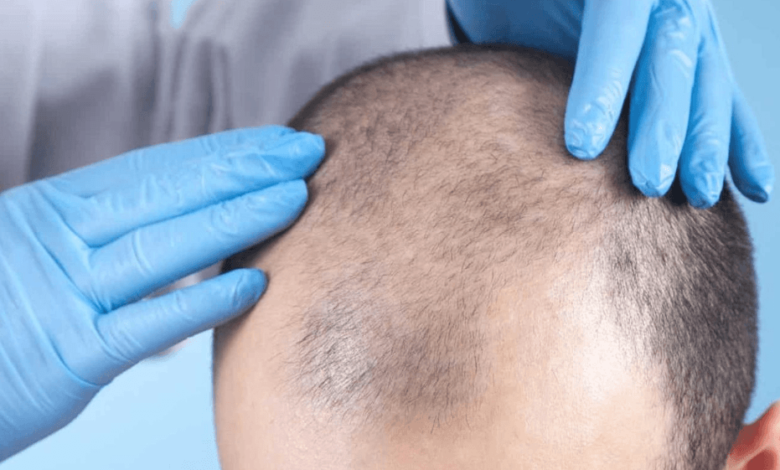
The Moment Most Men Recognize — And Ignore
It usually starts quietly. A little more hair on the pillow in the morning. A drain that needs cleaning a little more often. A part that looks slightly wider than it used to. Most men notice these things early — and then they do what men have been taught to do with uncomfortable truths: they wait.
They tell themselves it is stress. That it will sort itself out. That it is not that bad yet. And somewhere between that first quiet moment of recognition and the day they finally sit across from a hair loss specialist in Toronto, months become years. Years become a decade. And the options that were once available are no longer on the table.
This pattern is far more common than most men realize. Understanding why it happens — and what it actually costs — is the first step toward breaking it.
More Toronto Men Are Losing Hair Earlier Than They Think
Hair loss is not an older man’s problem. Research shows that roughly one in four men who develop male pattern baldness begin to see the first signs before the age of 21. By 35, nearly two-thirds of men experience some degree of noticeable thinning. In a city as fast-paced and appearance-conscious as Toronto, these numbers carry real weight.
The medical term for the most common type of male hair loss is androgenetic alopecia — a hereditary condition driven largely by sensitivity to a hormone called dihydrotestosterone, or DHT. DHT gradually causes hair follicles to shrink over time, producing thinner, shorter strands until the follicle eventually stops producing hair altogether. This process follows the natural hair growth cycle: the anagen phase, which is the active growing period lasting two to seven years; the catagen phase, a brief two-week transition; and the telogen phase, a three-month resting period before hair sheds and regrows. When DHT is involved, the anagen phase shortens with each cycle, and the hair that grows back becomes progressively finer.
The important thing to understand is that this process is slow and gradual — which is precisely why it is so easy to dismiss in the early stages, and why seeing a hair loss specialist in Toronto sooner rather than later makes a genuine difference to what treatments are available.
Why Men Avoid Getting Help
It Does Not Feel Serious Enough Yet
The most common reason men delay is deceptively simple: the loss does not feel dramatic enough to act on yet. Hair loss creeps forward in small increments. There is rarely a single alarming moment that forces action. Instead, there is a long, slow accumulation of small changes that are easy to rationalize away — a bad haircut, a bad angle, bad lighting.
This gradual nature is one of hair loss’s cruelest qualities. By the time most men feel the urgency to consult a hair loss specialist in Toronto, significant follicular damage has already occurred. Follicles that have been miniaturized over several years cannot always be fully restored. The earlier the intervention, the more tools a specialist has to work with.
The Stigma Is Still Very Real
Despite how common male hair loss is, the emotional weight it carries remains deeply underestimated. Many men feel a quiet shame about thinning hair that they would never openly admit — not to friends, not to a partner, and certainly not in a clinical setting. Hair is closely tied to identity, masculinity, and self-image. Losing it, even gradually, can chip away at a man’s confidence in ways that affect his professional presence, his social life, and his relationship with the mirror every morning.
Seeking help, for many men, feels like admitting defeat. It feels like making the problem real. This is one of the most significant barriers that keeps men from reaching out to a hair loss specialist in Toronto — not lack of awareness, but the emotional cost of acknowledging the issue openly.
The “It Will Come Back” Belief
A surprising number of men convince themselves that their hair loss is temporary — triggered by a stressful period, a change in diet, or a seasonal shift. And sometimes they are right. Telogen effluvium, a form of stress-related hair shedding, can cause dramatic but temporary loss that resolves on its own within six to eight months once the underlying cause is addressed.
But androgenetic alopecia does not reverse on its own. It follows a progression. Without treatment, it advances. Many men spend years believing they are in a temporary phase when they are actually watching a permanent pattern establish itself. A proper diagnosis from a qualified hair loss specialist in Toronto is the only way to know the difference.
What Is Lost by Waiting
Time is not neutral when it comes to hair loss. Every year of inaction is a year of continued follicle miniaturization— and that has practical consequences.
The Window for Non-Surgical Treatment Narrows
The most effective non-surgical hair loss treatments in Toronto, including PRP (platelet-rich plasma) therapy, minoxidil, and finasteride, work best when there is still active follicular activity to support. These treatments can slow or halt progression and, in many cases, stimulate meaningful regrowth — but only in follicles that are still functioning. Follicles that have been dormant for too long respond poorly, if at all.
The earlier a man begins working with a hair loss specialist in Toronto, the broader the non-surgical options available to him — and the more likely those options are to deliver lasting results.
Surgical Options Become More Demanding
For men whose hair loss has progressed to a point where surgical restoration makes sense, the FUE hair transplant remains the gold standard in Toronto. Follicular Unit Extraction is a minimally invasive procedure in which individual hair follicles are carefully harvested from the donor area — typically the back and sides of the scalp — and transplanted into thinning or bald areas. When performed well, the results are natural, permanent, and seamlessly integrated with existing hair.
However, advanced hair loss creates additional surgical challenges. A larger area of loss requires more grafts, places greater demands on the donor area, and may require multiple sessions. Men who act earlier typically have more donor hair available, more flexibility in treatment planning, and more natural-looking outcomes. Waiting does not just delay treatment — it changes what treatment can achieve.
What a Hair Loss Specialist in Toronto Can Actually Offer
A visit to a hair loss specialist in Toronto is not a commitment to surgery or a high-pressure sales consultation. It is a diagnostic process — one that identifies the type and stage of hair loss, evaluates the health of the scalp and donor area, and maps out a treatment plan that matches your specific situation and goals.
That plan might mean starting with a clinical-grade topical regimen or PRP therapy. It might mean monitoring for several months before deciding on next steps. Or it might confirm that an FUE hair transplant in Toronto is the most effective route forward. Clinics such as Hair Transplant Centre Toronto offer a full range of both surgical and non-surgical options, tailored to where each patient actually is in their hair loss journey — not a one-size-fits-all menu. Whatever the outcome of the initial assessment, arriving at that clarity early — before options narrow — is always more valuable than waiting until the situation feels urgent.
It Is Not Too Late to Start
If there is one thing that keeps men from reaching out to a hair loss specialist in Toronto, it is the belief that they have missed their chance — that the loss has gone too far, that nothing meaningful can be done, that it is easier to simply accept it.
In reality, modern hair restoration in Toronto offers solutions at every stage of hair loss. The earlier the action, the broader the options. But even for men who have been watching the situation for years without doing anything, a consultation opens the door to a clear, honest plan — one built around where you are now, not where you wish you had started.
Hair loss is not a personal failure. It is a medical condition, and like most medical conditions, it responds better to earlier attention than to years of hoping it resolves on its own. The men who act sooner are not the ones who cared more about their appearance — they are the ones who gave themselves more choices. That choice is still available, and it starts with a single conversation with a qualified hair loss specialist in Toronto.